



When businesses close for the day, many assume their property is secure until employees return the next morning. Unfortunately, after-hours is often when businesses are most vulnerable to theft, vandalism, trespassing, and property damage.
Many security issues don’t happen because businesses ignore safety altogether — they happen because of small gaps that are easily overlooked.
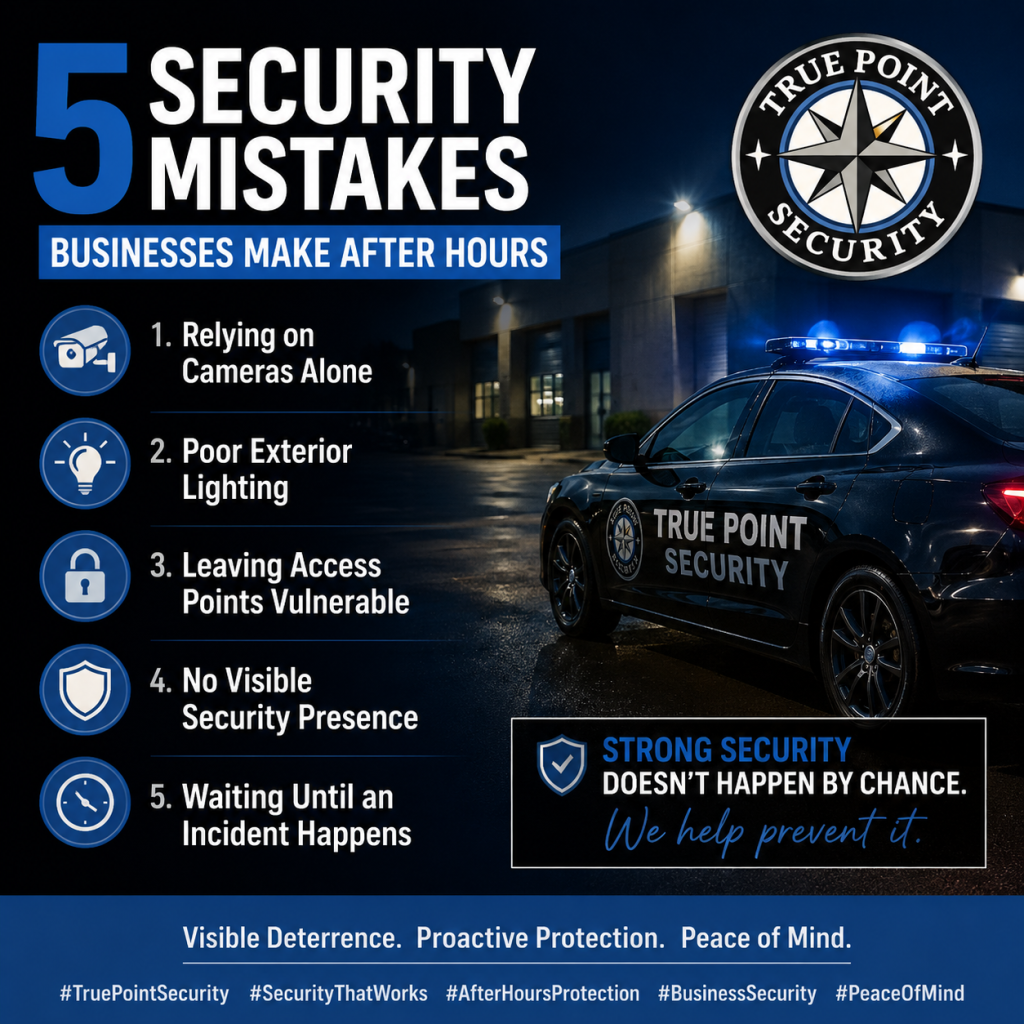
Here are five of the most common after-hours security mistakes businesses make and how to help prevent them.
1. Relying on Cameras Alone
Security cameras are important, but recording an incident is not the same as preventing one.
Many businesses install camera systems believing they are fully protected, only to discover footage after damage or theft has already occurred. Without active monitoring or response procedures, cameras often become documentation tools instead of prevention tools.
A stronger approach combines:
- Surveillance cameras
- Real-time monitoring
- Mobile patrol response
- Visible deterrence
The goal should always be prevention first — not just evidence after the fact.
2. Poor Exterior Lighting
Dark parking lots, alleys, entrances, and loading areas create opportunities for criminal activity.
Inadequate lighting can:
- Reduce camera visibility
- Make suspicious activity harder to detect
- Increase safety risks for employees
- Encourage trespassing or vandalism
Well-lit properties are one of the simplest and most effective deterrents businesses can implement. Proper lighting also improves visibility for patrol officers and camera systems during overnight hours.
3. Leaving Access Points Vulnerable
Unsecured side doors, gates, loading docks, and service entrances are common weak points after hours.
Businesses sometimes focus heavily on front entrances while overlooking:
- Rear access doors
- Storage areas
- Employee entrances
- Fence lines
- Detached buildings
Even small security oversights can create easy opportunities for theft or unauthorized access.
Routine lock checks, patrol inspections, and access control reviews can help identify vulnerabilities before they become costly problems.
4. Having No Visible Security Presence
Visible security presence still matters.
Criminals are far less likely to target a property when they know someone may actively monitor or patrol the area. Empty parking lots and unattended properties often become easier targets.
Visible deterrents can include:
- Marked patrol vehicles
- Security signage
- Uniformed officers
- Active monitoring systems
- Routine property checks
In many cases, visibility alone can discourage suspicious activity before it escalates.
5. Waiting Until an Incident Happens
One of the biggest mistakes businesses make is waiting until after theft, vandalism, or damage occurs before improving security measures.
Unfortunately, reactive security often becomes more expensive than proactive planning.
A single overnight incident can lead to:
- Property damage
- Lost revenue
- Insurance claims
- Operational downtime
- Employee safety concerns
- Reputation issues
Proactive security planning helps businesses reduce risks before incidents happen instead of scrambling afterward.
Why After-Hours Security Matters
Most businesses are at their most vulnerable when buildings are empty, staffing is limited, and visibility is reduced.
That’s why after-hours security should focus on:
- Prevention
- Visibility
- Rapid response
- Consistent monitoring
- Early detection
A layered security approach can significantly reduce risks while helping business owners gain peace of mind overnight.
How True Point Security Helps
At True Point Security, we understand that every property has different security concerns. Our approach focuses on proactive protection through visible deterrence, mobile patrol services, monitoring solutions, and rapid response support tailored to each client’s needs.
Because strong security isn’t just about responding to problems — it’s about helping prevent them in the first place.


Leave a Reply